Robotic surgery represents the pinnacle of modern surgical innovation. At Gujarat Gastro and Vascular Hospital in Surat, Dr. Naresh Gabani harnesses the Cambridge CMR Versius Robotic Console to perform complex digestive resections with millimeter-level accuracy.
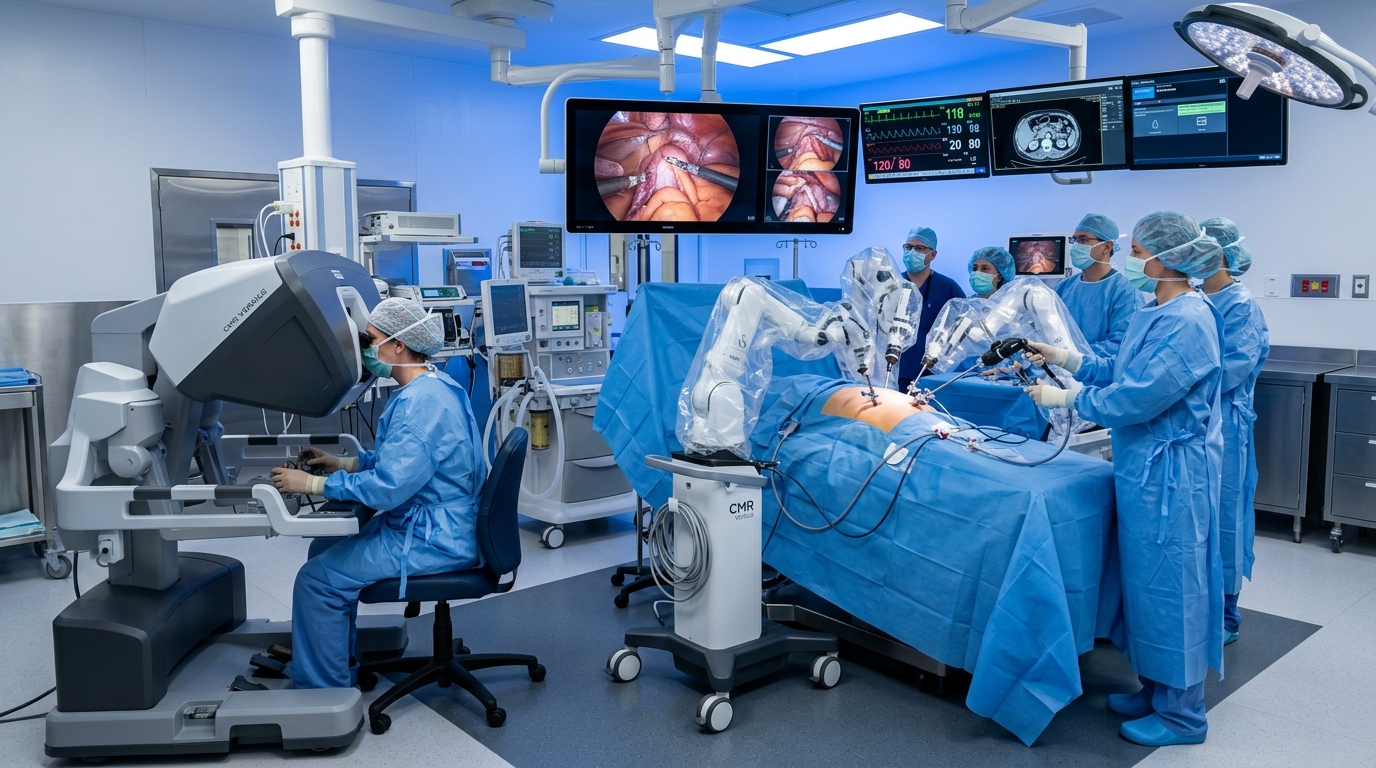
How Robotic Surgery Works
The surgeon sits comfortably at an ergonomic console, viewing the operating field through a high-definition 3D stereoscopic screen with up to 10x magnification. The console translates every natural hand movement into micro-movements of articulated robotic instruments inside the patient's abdomen.
Key Advantages Over Conventional Laparoscopy & Open Surgery
- Articulated Wristed Dexterity: Robotic instruments feature 7 degrees of freedom, rotating and angling with greater flexibility than the human hand inside tight spaces.
- Tremor Filtration: Advanced computer algorithms eliminate natural physiological tremor, allowing safe dissection along critical blood vessels.
- Minimal Incisions & Less Trauma: Miniature 8mm port sites reduce muscle disruption and nerve stretch.
- Significantly Reduced Blood Loss: Precise visualization of microscopic capillaries ensures meticulous hemostasis.
- Rapid Return to Normal Life: Shorter hospital stays (often 2–3 days earlier than open surgery), lower infection risk, and faster return to work.
Conditions Treated with Robotic Precision
- Pancreatic Resections: Distal pancreatectomy with spleen preservation and selected periampullary procedures.
- Colorectal Cancer: Low anterior resection (LAR) and ultra-low sphincter-saving rectal cancer operations within the narrow pelvis.
- Esophageal & Gastric Resection: Minimally invasive esophagectomy and radical gastrectomy with D2 lymphadenectomy.
- Complex Hernia & Abdominal Wall: Robotic Transversus Abdominis Release (rTAR) and retro-rectus mesh placement.
- Biliary Reconstruction: Precision choledochal cyst excision and robotic hepaticojejunostomy.