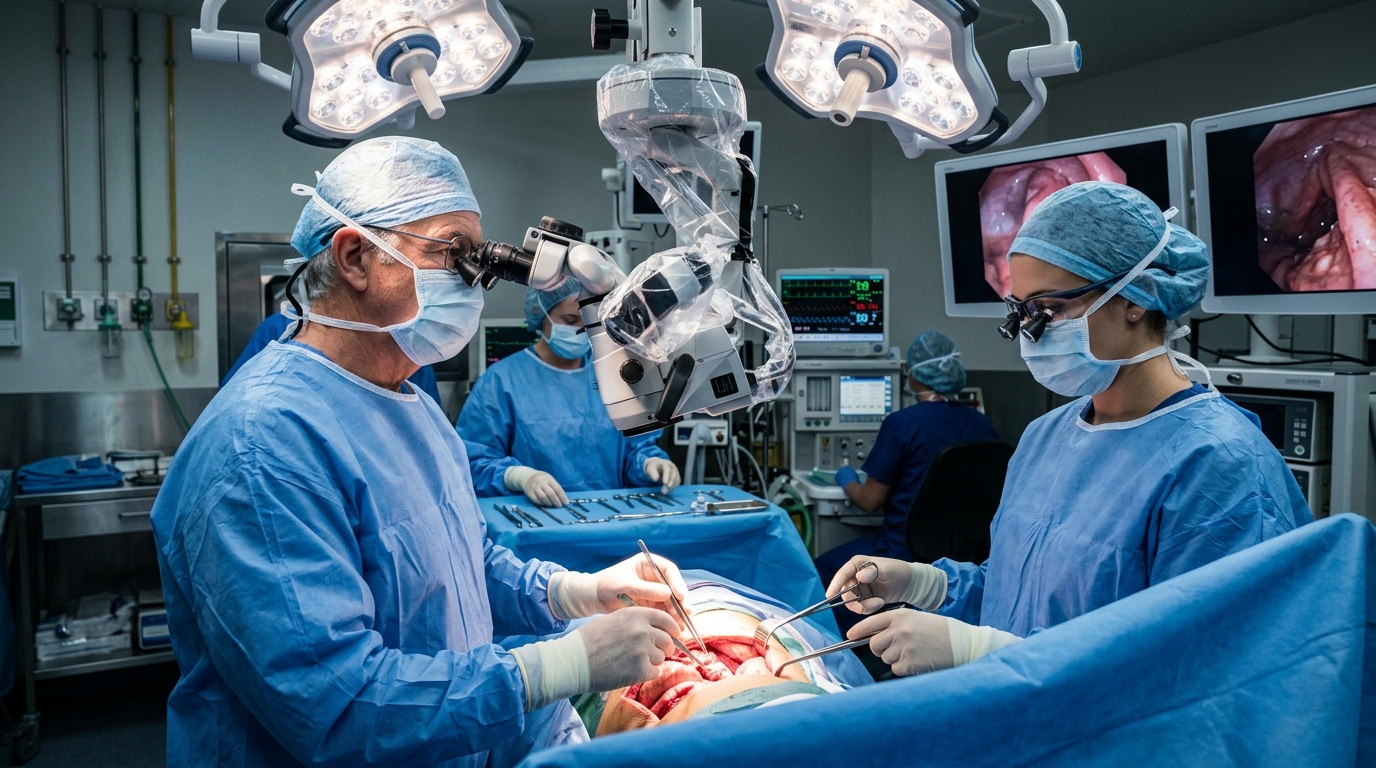
The Whipple procedure (pancreaticoduodenectomy) is one of the most demanding operations in gastrointestinal oncology. It provides the definitive curative opportunity for resectable tumors in the pancreatic head, bile duct, and duodenum.
Indications for the Whipple Procedure
Dr. Naresh Gabani performs the Whipple procedure after careful evaluation of contrast-enhanced triple-phase CT scans for the following conditions:
- Pancreatic Ductal Adenocarcinoma (PDAC): Resectable tumors located in the head or uncinate process of the pancreas.
- Ampullary Carcinoma: Cancers arising from the Ampulla of Vater, which often present with early jaundice.
- Distal Cholangiocarcinoma: Malignant strictures of the lower third of the common bile duct.
- Duodenal Adenocarcinoma & GISTs: Malignancies involving the second and third portions of the duodenum.
- Pancreatic Neuroendocrine Tumors (pNETs): Well-differentiated endocrine tumors located in the pancreatic head.
- Intraductal Papillary Mucinous Neoplasm (IPMN): Main duct IPMN or branch duct cysts exhibiting high-risk stigmata.
What the Whipple Operation Entails
The operation is conducted in two meticulous phases:
1. The Resection Phase
The surgeon carefully removes the head of the pancreas, the duodenum, the gallbladder, part of the common bile duct, and regional lymph nodes. Depending on the tumor location, the pylorus (stomach valve) may be preserved (Pylorus-Preserving Pancreaticoduodenectomy - PPPD) to facilitate smoother postoperative digestion.
2. The Reconstruction Phase
Three delicate micro-anastomoses are constructed using a loop of jejunum:
- Pancreaticojejunostomy: Connecting the remaining healthy pancreas tail to the small intestine to preserve natural digestive enzymes.
- Hepaticojejunostomy: Connecting the bile duct to the intestine to restore normal bile flow and resolve jaundice.
- Gastrojejunostomy / Duodenojejunostomy: Connecting the stomach or upper duodenum to allow normal food passage.
The SGPGI Lucknow Surgical Discipline
High surgical volume and institutional discipline directly correlate with low postoperative pancreatic fistula (POPF) rates. Trained under the stalwarts of pancreatic surgery at SGPGI Lucknow, Dr. Naresh Gabani adheres to strict retroperitoneal clearance, vascular adventitial dissection, and precision non-ischemic anastomotic techniques.
Recovery & Post-Operative Milestones
- Day 1–2: Early bedside mobilization and surgical critical care monitoring.
- Day 3–4: Gradual introduction of clear oral liquids once bowel activity returns.
- Day 5–7: Transition to soft diet, removal of surgical drains after biochemical amylase verification.
- Day 8–10: Planned hospital discharge with specialized nutrition and pancreatic enzyme guidelines.